



Today’s new titles on Castalia Unlimited are The Maestrazgo Campaign, the 25th volume in the Episodios Nacionales, which we are determined to complete in all 46 volumes before the end of the year, and Natsume Soseki’s comedic bildungsroman, Botchan. As a bonus third addition today, we have included a classic historical work from the Castalia Library, De Bello Gallico.
TITLES: 276
DOWNLOADS: 389
Don Beltrán, driven from home by his daughter-in-law, goes east in early 1837 to recover a debt of honour owed him by a dead friend, Juan Luco. The road takes him into the cruellest theatre of the Carlist war, where Ramón Cabrera rules by genius and by firing squad.
Captured and sentenced, the old man is spared and befriended by a Carlist officer, Manuel Santapau, called Nelet, who is desperately in love with Luco’s daughter Marcela, a nun turned wandering penitent. Don Beltrán, the retired libertine, becomes their go-between and pleads the cause of marriage. But Nelet is weighed down by the burden of something he has done in the war, and his guilt will not stay buried.
Fresh out of school with no ambitions, no money, and no talent for diplomacy, Botchan accepts a teaching post at a middle school in rural Shikoku and immediately regrets it. The students are savages. The headmaster is a windbag. His colleagues are a gallery of petty conspirators he can only keep straight by the nicknames he invents for them: Red Shirt, Clown, Porcupine, the Pale Squash. The only person in the world who believes in him is Kiyo, the old family servant back in Tokyo who still calls him “Botchan” (young master) and waits for him to return home.
Botchan has no filter, no patience, and no reverse gear. He says what he thinks, picks fights he can’t win, and keeps a running tally of every slight. He is also, beneath all his bluster, deeply loyal, quietly heartbroken, and funnier than he knows.
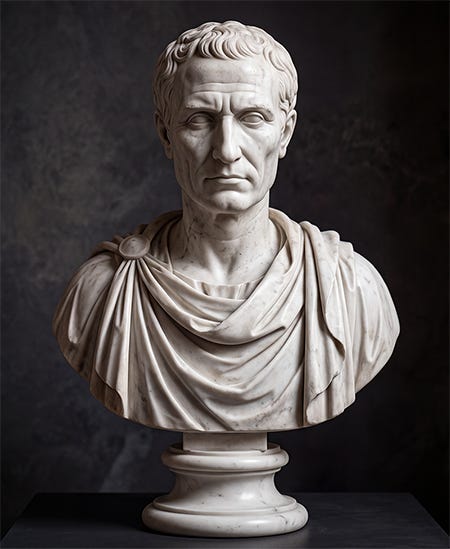
The Commentarii de Bello Gallico, by Gaius Julius Caesar, describes the Gallic Wars over a period of eight years, beginning with conflict over the migration of the Helvetii in 58 BC. The Helvetians were forming a massive migration straight through the provinces. When a group of neighboring allies came to Caesar himself asking for help against these invading Helvetians, that was all the justification Caesar needed to gather his army. This drew in neighboring tribes and the Germanic Suebi.
By 57 BC, Caesar had resolved to conquer all of Gaul, and led campaigns in the east, where the Nervii nearly defeated him. In 56 BC, Caesar defeated the Veneti in a naval battle and took most of northwest Gaul. In 55 BC, Caesar sought to boost his public image, and undertook expeditions across the Rhine river and the English Channel that were the first of their kind. Upon his return from Britain, Caesar was hailed as a hero, though he had achieved little beyond landing because his army had been too small and he was unable to land his cavalry. The next year, he went back with a larger army, including cavalry, and was more successful, setting up a friendly king and bringing his rival to terms. However, tribes rose up on the continent, and the Romans suffered a humiliating defeat. 53 BC saw a draconian campaign against the Gauls in an attempt to pacify them. This failed, and the Gauls staged a mass revolt under the leadership of Vercingetorix in 52 BC. Gallic forces won a notable victory at the Battle of Gergovia, but the Romans’ indomitable siege works at the Battle of Alesia utterly defeated the Gallic coalition.

To get six or more ebooks of your choice every month, join Castalia Unlimited.