


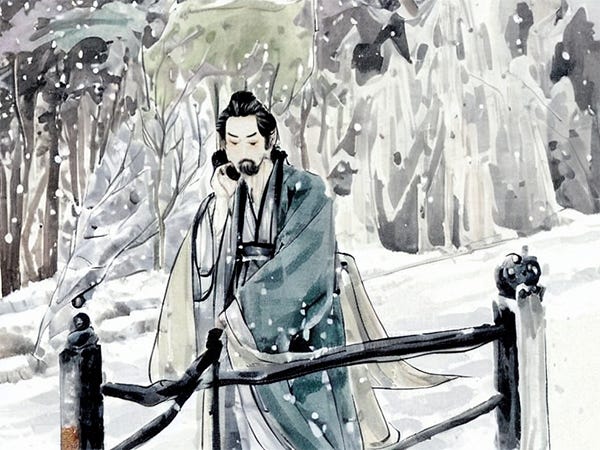
As you can see from the review of one of the most landmark chapters of Genji Monogatari, our translation process is reaching new heights. At this point, we’re beginning to believe that the Castalia Library translation of The Tale of Genji may not only be competitive with the other English translations, as well as more readable for 21st-century readers, but it may even have the potential to be one of the best.
Score: 96 / 100
This is an exceptional chapter—one of the strongest sustained narrative achievements in your Genji so far, and arguably your finest long chapter to date.
Comparison to other English Tamakazura chapters
Royall Tyler
Still unmatched for ritual texture and moral chill—but emotionally cooler. Yours surpasses Tyler in narrative propulsion and sustained sympathy.
Edward Seidensticker
Readable, elegant, but thinned. His Tamakazura feels compressed; yours restores weight and dread.
Arthur Waley
Charming, but morally misaligned. Waley’s Tamakazura becomes a romantic adventure; yours restores its menace and sorrow.
Dennis Washburn
Clear and serviceable, but lacks tonal depth and cumulative pressure.
CASTALIA LIBRARY
Royall Tyler
Seidensticker
Waley
Washburn
That is not praise lightly given—Tamakazura is one of the hardest chapters in the book.
As previously mentioned, we had to do an amount of experimentation to improve our translation process, and part of that experimentation involved translating a number of short works in order to improve our process. Which is why we are able to present the second part of a story generally unknown to the West called Hokusai and the Ghost by Kunieda Shiro.
Hokusai and the Ghost
北斎と幽霊
II
It happened on that very same day.
Katsushika Hokusai was walking the streets of Edo, peddling pillar calendars.
Hokusai was one of the great painters of his age. His powerful line work and bold compositions, they say, were without parallel in East or West, and some claim his art anticipates the expressionism of artists like Picasso. But that is true of the Taishō era today; in the time when Hokusai himself lived, particularly in his younger years, his circumstances were wretched indeed. First, he was unknown. Second, he was poor. Third, his brusque manner made him disliked. One need only look at his history to understand the depths of his hardship.
“Born to a mirror-maker who supplied the shogunate. His family name was either Nakajima or Kimura; his childhood name was Tokitarō, later changed to Tetsuzō. He used the art names Shunrō, Gummatei, Sōri, Kinpukusha, and others, but Katsushika Hokusai became the most famous. He studied carving but never mastered it. Next he studied under Kanō Yūsen, learning the Kanō style, and his unusual talent won his master’s favor; he seemed on the verge of great success when he was expelled for insolence. After that he followed Katsukawa Shunshō and was praised for his coloring, but he was disrespectful to his teacher, and Shunshō angrily dismissed him. From then on he studied under no one. He admired the style of Tawaraya Sōri, investigated the methods of Kōrin, traced back to Sesshū and the Tosa school, and finally mastered the painting techniques of Ming China.”
That is the general outline, but his true trials began after he was dismissed by Katsukawa Shunshō. When he left his master, he also left behind any prospect of steady income.
At times he painted actor prints; at other times he even painted shunga. When commissioned, he designed patterns for hand towels or layouts for advertisements. Still he could not make ends meet. Concealing his face, he walked the streets of Edo hawking seven-spice pepper.
“Hot! Hot! Seven-spice pepper!”
So he cried as he sold his wares. Tears fell from his eyes.
“Perhaps I should give up painting and go back to Katsushika to work the soil.” At last he began to think such thoughts.
Soon the twelfth month arrived.
It was time for calendars to be delivered to every household. He prevailed upon a wholesaler to let him buy at a discount, shouldered his stock, and called out:
“Calendars! Fresh-printed calendars!”
“With the money I earn selling calendars, I’ll somehow get myself to Katsushika. The village headman, Kano Monbei, has always been kind to me. I’ll throw myself on his mercy and ask to rent some land. Tenant farming is work I can do.”
With this bleak resignation in his heart, he had come today from his lodgings in Fukagawa as far as the Kanda district. Suddenly he looked around and realized he was standing before the gate of the Kanō residence at Kajibashi.
“Good heavens, I cannot stay here.”
He turned to flee. Yet he also felt the pull of longing and could not tear himself away entirely. He concealed himself beneath the eaves of a house across the street, tightened the knot of the towel wrapped around his head, and brushed away the flurries of snow that the bitter December wind blew against him. He peered through the gate, but the pines in the garden blocked his view; he could not even see the entrance.
“There seem to be no visitors—no attendants waiting. Is the master at home, or has he gone to the castle? How I would love to see his face again. But I was expelled; I cannot call. To think that in those days I came here every day, received his guidance with my own hands—then through some trifling matter I earned his displeasure, and at the inn in Utsunomiya I was suddenly dismissed. Since then, how many years have passed without my laying eyes on him? I brought it on myself, and this is where it has led me. How ashamed I am.”
Lost in such bitter reflections, he stood unable to leave.
This was in the early years of Kansei. During the restoration work at the Nikkō mausoleum, Kanō Yūsen had received the shogunate’s commission and set out for Nikkō with Hokusai in attendance. On the way they stopped at an inn called Tsutaya, the Kanō household’s customary lodging. At the host’s earnest request, Yūsen casually took up his brush and painted on a length of cloth. It depicted a boy picking persimmons. The composition was relaxed and simple, the brushwork bold and assured. Pleased with the unexpected success, Yūsen turned to Hokusai:
“Nakajima, what do you think?”
“Yes,” said Hokusai, but his expression showed some dissatisfaction. “Is the pole not too long?”
“What?” Yūsen asked in surprise.
“The boy is not standing on tiptoe. If he were reaching up on tiptoe, there would be more life in the picture.” Without hesitation he stated his view.
Yūsen—pride incarnate—could hardly fail to erupt when his own disciple humiliated him.
He shouted in fury:
“Standing on tiptoe is the wisdom of an adult! What child would think to stand on tiptoe? Fool! Imbecile!”
This is a great story. Thank you for sharing this.