


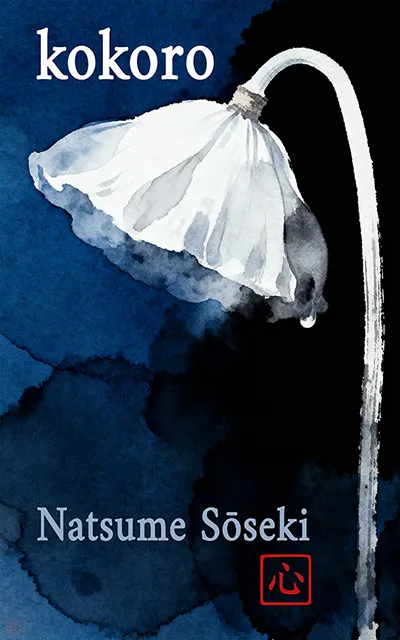
Kenji Weaver’s new translation of the classic Japanese psychological novel, KOKORO by Natsume Sōseki, is now available on Amazon and Kindle Unlimited. This only the third English translation of the third-bestselling book in Japanese literary history and it is intended to be more accessible to contemporary readers without sacrificing any of the traditional elements that have made the book a haunting, timeless classic.
“Love is a sin. Do you understand that?”
Natsume Sōseki’s Kokoro (1914) is one of the essential novels of modern Japanese literature—a haunting story of friendship, guilt, and the isolation that follows betrayal. In the more than 100 years since its publication, Sōseki’s masterpiece has not aged a day.
A Friendship Shrouded in Silence A young university student encounters a mysterious older man at a seaside resort. Drawn to his intellect and profound melancholy, the student calls him only “Sensei”. Their friendship deepens over time, but Sensei maintains a calculated reserve, shadowed by a darkness in his past that he refuses to share. When he finally breaks his silence, what he reveals is a shattering betrayal with life-altering consequences.
The Right Tempo for the 21st Century For decades, English readers have viewed Kokoro through the lens of academic translations that sometimes feel as distant as the Meiji era they describe. Kenji Weaver’s vibrant new translation brings the classic into contemporary English without sacrificing the spirit of the original Japanese.
About the Weaver translation:
Intimate Prose: The language breathes. Sensei’s long confession—one of the great set pieces in world literature—unfolds with the terrible intimacy of a letter you were never meant to read.
Emotional Immediacy: By rejecting the emphasis on literalism of the two previous English translations, Weaver allows the silences to land and the psychological heat of the story to hit the reader directly.
Accessible Beauty: From the casual atmosphere of the oceanfront in Kamakura to the suffocating tension of an old man’s deathbed in the country, this version makes Sōseki’s century-old world feel immediate and alive.
For readers who know Kokoro, this translation will feel like hearing a familiar piece of music played at the right tempo. For those coming to it for the first time: this is a story about what it costs to betray someone, and what it costs to keep that secret for a lifetime.
I always called him Sensei. I can’t call him anything else. I’m not going to use his real name. It’s not that I’m trying to protect anyone’s privacy. It just feels more natural to me this way. Whenever I think of him, the word “Sensei” is what comes to mind first. It’s the same when I sit down to write. I can’t bring myself to use some distant, formal title.
I met Sensei in Kamakura. I was a young student then, and still naive. A friend of mine had gone there for summer vacation, and he sent me a postcard telling me I should come. So I scraped together some money and went. It took me two or three days just to come up with what I needed. But I hadn’t been in Kamakura three days before my friend got a telegram from home telling him to come back immediately. The telegram said his mother was sick, but he didn’t believe it. His family had been pressuring him to marry someone. But he was too young, and anyway, he didn’t like her. That’s why he’d avoided going home for summer break and had been hanging around near Tokyo instead. He showed me the telegram and asked what he should do. I had no idea. But if his mother really was sick, he obviously had to go. So in the end, that’s what he did. And I was left there alone.
School wasn’t starting for a while, so I could either stay in Kamakura or go home. It was up to me. I decided to stay on at the same inn. My friend came from a wealthy family in central Japan, so money was never a problem for him. But given the kind of school we went to and how old we were, we lived pretty much the same way. Being on my own didn’t mean I had to go find some nicer place to stay.
The inn was in a quiet, out-of-the-way part of Kamakura. If you wanted anything modern like a pool hall or ice cream, you had to cross a long hill to get there. Even by rickshaw, the price was twenty sen. But there were private villas dotted here and there, and the sea was close by, which made it a good spot for swimming.
I went to the beach every day. I’d walk through the old thatched houses, dark with smoke, and come out onto a beach so packed with city people the sand looked alive. Sometimes the ocean looked like a crowded bathhouse, all packed with bobbing black heads. I didn’t know a single person there. But I liked being wrapped up in all that noise and motion. I’d lie on the sand, let the waves hit my knees, splash around. It felt good.
That’s where I first saw Sensei.
Nice. Will this be available via the Arkhaven or NDM channels?
Is Castalia publishing this title?
I would buy.