


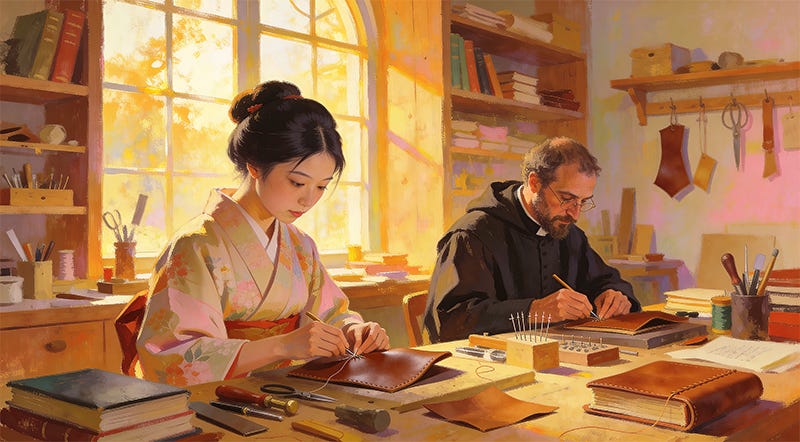
The objective of the Castalia Library is to produce the most beautiful books in the world. This transformation of this substack’s paid subscription is an important part of a greater objective for Castalia House to become the best publisher in the world.
One of the things that the Library has made highly desirable, if not absolutely necessary, is the development of our own translation capabilities. This was always on our long-term radar, as evidenced by the establishment of our sister company Editions Alpines, which publishes foreign language versions of our works, including Les Canons de Mars and Wahrscheinlichkeit Null, both of which are available in both print and ebook editions.
As part of the process of producing an original translation of Genji Monogatari for the Library subscription, we developed an excellent system for translating foreign language works that actually exceeds all but the very best English translations. The system not only translates the works to a high level of refined precision designed for the specific source language, but scores the results against existing translations at every level, then suggests targeted improvements in three separate categories.
The previous publications of Kokoro and Botchan were translated with an early version of this system. We further refined it, however, when our initial translation of Sanshiro failed to score close to the level of the excellent Jay Rubin translation. After several months of work, we were able to considerably improve our results.
The anchors place Rubin’s Sanshirō at ≈84. This translation scores 85.2 against the same source text with the source available for direct comparison.
Is this translation closer to Rubin or to Costa? It is in the Rubin range. Does it demonstrate the restraint-as-achievement quality that defines Master Class? In passages 3 and 5, yes — the translator’s skill is visible but consistently in service of Sōseki’s narration, never competing with it. In passage 4, the restraint is slightly less consistent, with occasional smoothing. Does the translator’s artistry compete with the source? No. The prose is skilled but self-effacing. Sōseki sounds like Sōseki.
Is this a historical event in translation? No. It is an excellent translation of a specific novel by a translator who has clearly studied both the source text and the target language with care. That places it in the lower Master Class range, not the upper.

What we’ve discovered in the meantime is a massive library of untranslated works in various languages, works of very high quality, some of which are particular importance to the national culture. For example, only a few volumes of the extensive Episodios Nacionales series by Benito Pérez Galdós have ever been translated from Spanish into English, and those initial few rate in the low 60s on our translation scale.
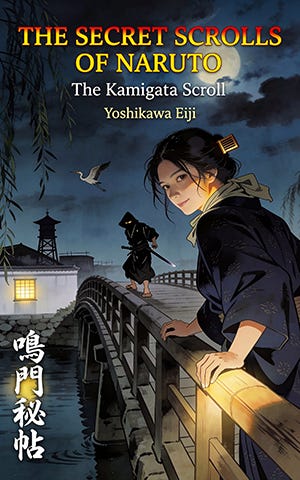
So what we’re doing, starting today, is making a commitment to the paid subscribers of this site to deliver a complete high-quality translated ebook every Monday. Today, we have already sent out the new Sanshiro translation. Next Monday, we’ll be sending out the first volume in the The Secret Scrolls of Naruto: The Kamigata Scroll, a never-before translated work by Yoshikawa Eiji, the author of Musashi known as the Dumas of Japanese literature.
All six works of Yoshikawa’s Naruto Hicho have already been translated; we did not wish to announce this plan until we had enough completed works in the pipeline to ensure that we don’t fall behind. The price of the monthly subscription here has been raised from $7.50 to $9.99, which means that those acquiring the full ebook library will save more than 60 percent on the cost of buying the ebooks from Amazon as well as supporting the introduction of dozens of great works to the English language.
This may seem like an unusual turn for a deluxe leatherbound publisher, but it’s actually a long-term strategic move to ensure that Castalia Library always has a near-endless supply of excellent, high-quality texts to offer as leather editions for your personal libraries that do not simply replicate what Franklin and Easton Press have to offer.
Of course, we absolutely encourage Library, History, Cathedra, and Chateau subscribers to maintain their free subscriptions here, since this will remain the place to always be informed of the latest developments on the leather book front. We will have announcements on that side later this week.
Thank you!!!! This is so exciting.
Just keeps getting better and better