


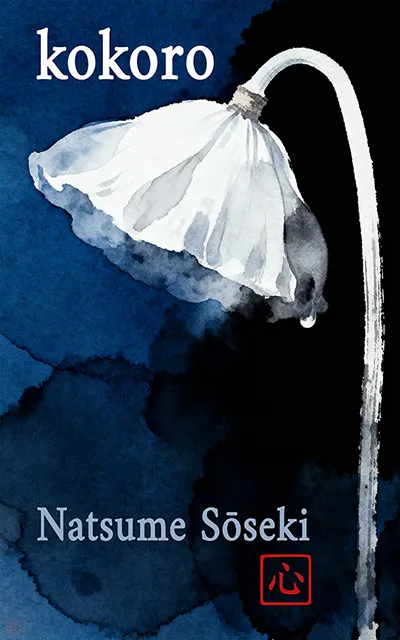
In light of the success of Castalia’s new translation of the classic Japanese novel, I thought it might be interesting to a) take a poll of potential interest in a Library edition of the Weaver translation of Kokoro and b) share the multi-AI analysis of the Weaver translation compared with its two predecessors, the 1949 McClellan translation and the 2010 McKinney translation.
I should also mention that there is a 1941 translation by Ineko Kondo that was the first English translation, but I’ve never seen it or even heard anything about it. So the Weaver translation is the fourth English translation in 112 years, not the third.
A few people, a very few, have suggested doing a new subscription of Japanese literature, but it’s too soon for that and we already have a new subscription that we’ll be announcing on Monday. On Monday, I’ll also provide updates for Library, History, and Cathedra; we are currently printing 14 books so we are in the process of catching up to the backlog.
With regards to the AI analyses of the translation quality, the comparative reviews were done blind on the basis of 12 sections that were chosen by Gemini as being the most useful in distinguishing the differences between the translations. I added the titles afterward for ease of identification.
CLAUDE REVIEW
Weaver (2025)
Prose quality: Vigorous and direct. Sentences have good forward momentum. The voice feels inhabited—this narrator exists as a person, not a translation artifact.
Psychological depth: Handles interiority well. “I’ve learned to hate humanity itself” lands harder than the more abstract versions. The final scene (III-48) achieves real dread: “A black light pierced my future and lit up my whole life ahead in a single ghastly flash.”
Weaknesses: Occasionally explains what could be implied. Some phrases feel workmanlike rather than shaped (”I couldn’t even find words to comfort him”).
Rating: 8.5/10
McClellan (1957)
Prose quality: Stiff. The opening sentence alone—”I shall therefore refer to him simply as ‘Sensei,’ and not by his real name”—is labored and legalistic. Throughout, the prose plods where it should glide.
Psychological depth: The distance in the prose actually undermines the intimacy the novel requires. When the narrator describes his relationship with Sensei, it reads like a report rather than a confession.
Weaknesses: Passive constructions everywhere. “It was at Kamakura, during the summer holidays, that I first met Sensei” is throat-clearing. “I was honest enough to blush” is awkward. The final scene lacks visceral impact.
Rating: 6.5/10
McKinney (2010)
Prose quality: The most carefully shaped sentences. Good variation in rhythm. The opening flows naturally: “’Sensei’ springs to my lips whenever I summon memories of this man.”
Psychological depth: Strong. McKinney captures the narrator’s compulsion toward Sensei without over-explaining it. “Sensei was a man who could, indeed must love, yet he was unable to open his arms and accept into his heart another who sought to enter” is precise and affecting.
Weaknesses: Occasionally over-refined. Some phrasing is slightly literary in a self-conscious way (”the great soundless whirl of darkness”). The polish sometimes smooths over rawness that the novel needs.
Rating: 8.0/10
Weaver is the strongest. It has the most life in it—the narrator sounds like someone urgently telling you something that matters, which is exactly what Kokoro requires. The prose serves the psychology rather than calling attention to itself.
McKinney is accomplished and readable, but the refinement occasionally creates distance where the novel needs closeness.
McClellan reads like a translation. The prose is effortful, the constructions are often inverted or passive, and the cumulative effect is to muffle rather than transmit Sōseki’s voice. Its long dominance appears to have been a function of availability, not quality.
GEMINI REVIEW
Weaver: The Modern “Page-Turner”
This version feels like it was written yesterday. It strips away the “old book” smell and uses a vocabulary that is punchy, direct, and conversational.
The Vibe: It reads like a modern memoir or a contemporary psychological thriller.
The Pros: It is incredibly easy to read. Sentences are short and hit hard. For instance, instead of formal descriptions, it uses phrases like “scraped together some money” and describes the beach as “so packed with city people the sand looked alive”. It captures the protagonist’s anxiety in a way that feels relatable to a modern reader.
The Cons: Sometimes it feels too modern. When characters talk about “money problems” or “marrying someone they didn’t like,” it can feel like a story set in 2024 rather than 1914, which might lose some of the unique historical atmosphere.
Reader Rating: 8.5/10
McClellan: The Stately Classic
This is a more traditional-feeling book. It uses “shall” and “therefore,” and the narrator sounds like a gentleman from a bygone era.
The Vibe: It feels like reading a classic 19th-century novel—dignified, slightly distant, and very proper.
The Pros: It captures the “weight” of the story. The formality of the language makes the heavy themes of honor and suicide feel more appropriate to the time period. It uses classic imagery like the sea looking like a “public bath... covered with a mass of black heads”.
The Cons: It can be a bit of a “slow” read. The sentence structures are more complex and can feel a bit repetitive or wordy compared to the others (e.g., “I shall therefore refer to him simply as...”).
Reader Rating: 7.5/10
McKinney: The Vivid Storyteller
This version strikes a middle ground. It’s modern enough to flow well, but it uses much more descriptive and atmospheric language than Translation 1.
The Vibe: It feels like a high-quality literary novel that balances plot with beautiful, specific imagery.
The Pros: The descriptions are much richer. It describes the old gate’s thatch as having a “grey ashlike hue” and the protagonist’s heart “instantly freezing” when he reads a grim letter. It handles the internal monologue of the characters with a lot of nuance—it doesn’t just tell you they are sad; it describes the feeling of the sadness.
The Cons: It requires a bit more focus than Weaver because the vocabulary is more varied and the sentences are more descriptive.
Reader Rating: 9/10
DEEPSEEK REVIEW
These three translations of Kokoro offer distinct experiences for today’s reader, balancing faithfulness to Sōseki’s tone with readability in modern English. Here’s an impartial breakdown of their strengths and weaknesses.
Overall Impressions
Weaver: Feels the most direct, immediate, and psychologically intimate. It reads like a contemporary literary novel.
McClellan: The most formal and “classic” feeling, prioritizing a measured, elegant tone. Can feel slightly distant.
McKinney: A strong balance between clarity and literary grace. Often feels the most naturally phrased for a modern audience without sacrificing depth.
Category-by-Category Review
1. Readability & Flow (How easy is it to get absorbed?)
Weaver: Excellent. The prose is fluid, conversational, and propulsive. Sentences are often shorter and more direct, mirroring thought patterns. It’s the easiest to binge-read.
McClellan: Good, but formal. The flow is steady and dignified, but the syntax can be more complex and the tone slightly more detached. It requires a touch more focus.
McKinney: Excellent. Strikes a near-perfect balance. It maintains a literary quality but with a natural, unobtrusive rhythm that feels designed for seamless reading in 2025.
2. Character Voice & Intimacy (How well do we feel the narrator?)
Weaver: Most intimate and urgent. The narrator’s voice feels raw, personal, and sometimes younger. His confusion, admiration, and guilt are rendered with visceral immediacy (e.g., “I felt a flash of resentment”).
McClellan: Most reflective and restrained. The narrator feels more like an older man recounting events with measured sorrow. The emotional peaks are subtle, which can be powerful but less gripping.
McKinney: Deeply personal and clear. Achieves a compelling intimacy without over-dramatization. The narrator’s voice is thoughtful and engaging, making his inner turmoil accessible and poignant.
3. Handling of Key Emotional Moments
Weaver: High-impact, almost cinematic. Uses stark language (”black light,” “ghastly flash,” “sprayed across the sliding door”) that maximizes the shock and horror.
McClellan: Restrained, tragic. Leans on understatement (”the great shadow,” “stunned,” “I am safe.”). The horror is more intellectual and melancholy.
McKinney: Powerfully vivid and precise. Successfully blends the visceral shock of T1 with the tragic weight of T2. Phrases like “black blaze,” “terrifying clarity,” and “spurted over the sliding doors” are both graphic and literary.
4. Modern Resonance (Does it feel relevant today?)
Weaver: Very high. Its directness in discussing isolation, generational disconnect, and mental anguish feels immediately relatable to a 21st-century reader.
McClellan: Moderate. It feels more like a period piece—a beautiful, essential classic. The themes are universal, but the presentation is less conversational.
McKinney: Very high. Manages to feel timeless. The psychological insights are rendered with a clarity that transcends era, making Sensei’s alienation and the narrator’s guilt feel current.
Final Verdict & Recommendation for a 2025 Reader
This isn’t about finding the single “best” translation, but the one whose style best suits your preferences as a modern reader.
Choose the Weaver translation if: You want the most immersive, fast-paced, and emotionally raw experience. It reads like a compelling modern drama and is perfect if you prioritize emotional impact and immediacy over lyrical flourish.
Choose the McClellan translation if: You prefer a more traditional, contemplative, and “classic novel” feel. It’s like listening to a story told by a wise, sad elder. Ideal for readers who enjoy Henry James or Edith Wharton’s prose style.
Choose the McKinney translation if: You want the best all-around blend for a contemporary audience. It offers superb clarity, strong emotional resonance, and literary grace without ever feeling stiff or overly casual. It is the most likely to satisfy a wide range of readers today.
this looks like a good novel. personally it sounds like I would prefer the McClellan translation. I'd definitely support having it in the line up for the regular Castalia subscription. Look forward to reading it! Thank you Vox and take care and God bless!
I would love to see Castalia tackle this title. But since leather binding seems more appropriate for Western books maybe a Japanese inspired binding might be considered. Searching the web, I see there's quite a range of Japanese papers suitable for book binding, including some beautiful Japanese bookcloth that might be utilized with your standard cloth-cover binding techniques. Perhaps an appropriate Ukiyo-e image could be printed on that cloth cover. Add some Japanese end papers and other detailing, mindful of the budget of course, and you could cook up a striking and tasty Japanese dish to adorn Kokoro, while extending Castalia's stylistic range.